Updated: 1 October 2026. A source-based buying guide for students, freelancers, agencies and marketing teams.
Direct answer: The best AI SEO tool depends on your job: Semrush and SE Ranking suit combined research and reporting; Surfer, Clearscope and Frase support content workflows; Ahrefs Brand Radar, Profound, Peec AI and OtterlyAI help monitor AI visibility. Compare coverage, limits and total cost before choosing.
Which AI SEO tools should you shortlist for your main task?
Looking for software that helps your content perform in search and AI answers? First identify the work you need to improve. Keyword discovery, article editing, technical audits and AI citation monitoring require different evidence and different tools. Buying several overlapping subscriptions can leave you with more dashboards than useful decisions.
- Research and reporting: shortlist Semrush, SE Ranking or Ubersuggest.
- Content planning and optimization: compare Surfer, Clearscope, MarketMuse and Frase.
- Connected content and GEO workflows: examine Scalenut or Writesonic.
- Technical implementation: assess Screaming Frog or Alli AI.
- Dedicated AI visibility: compare Ahrefs Brand Radar, Profound, Peec AI and OtterlyAI.
TL;DR: Start with one research or workflow tool that solves a current problem. Add specialist tracking when your team has a defined prompt set and a plan for acting on the findings.
How this AI SEO software comparison was researched
This guide compares publicly documented product features and official pricing pages checked on 1 October 2026. The recommendations are editorial judgments about fit. We did not conduct a controlled performance test across these 15 products, assign accuracy scores or verify vendor case-study outcomes.
We considered the main task, documented feature coverage, pricing basis, usage limits and likely workflow trade-offs. A vendor’s content score, visibility score or marketing claim should not be treated as an independent ranking factor or a guaranteed result.
Prices are shown in the currencies displayed by the retrieved official pages. Annual billing is labeled explicitly. Taxes, additional seats, engine add-ons, exchange rates and promotional terms can change the amount you pay. Where a numeric price could not be verified, the guide directs you to the official pricing page.
AI SEO tools comparison table: features, use cases and pricing
| Tool | Best fit | Price / billing basis |
|---|---|---|
| Semrush | Agencies combining SEO research and AI search reporting | SEO $139/mo; Starter bundle $199/mo |
| Ahrefs Brand Radar | Teams investigating AI mentions, citations and competing brands | Custom prompts from $50/mo; Index from $199/mo |
| Surfer | Writers and content teams improving existing articles | Discovery €49/mo; Standard €99/mo, billed yearly |
| Clearscope | Editorial teams managing content and tracked queries | Essentials $129/mo |
| MarketMuse | Content strategists deciding what to create or improve | Limited free plan; confirm paid quote |
| Frase | Freelancers and teams building a research-to-publication workflow | Starter $49/mo, or $39/mo billed yearly |
| SE Ranking | Marketing teams managing repeatable SEO and GEO work | Core $129/mo, or $103.20/mo billed yearly |
| Ubersuggest | Students and smaller teams learning research and reporting | Limited free access; confirm paid/lifetime offer |
| Scalenut | Small content teams connecting clusters with GEO content workflows | Starter displays $59/mo before promotion |
| Writesonic | Teams linking AI visibility reporting with content production | Starter $79/mo billed annually |
| Screaming Frog SEO Spider | Technical SEOs diagnosing pages before optimizing content | Free 500-URL crawl; paid €245/year displayed |
| Alli AI | Agencies implementing repeatable website optimization rules | Business $299/mo; annual option available |
| Profound | Organizations coordinating AI search research and team workflows | Limited trial; custom enterprise pricing |
| Peec AI | SEO teams tracking a consistent set of AI search questions | Paid packages; verify live price |
| OtterlyAI | Solo marketers starting with a small prompt set | Lite $29/mo for 15 prompts |
1. Semrush for combined keyword research and AI visibility
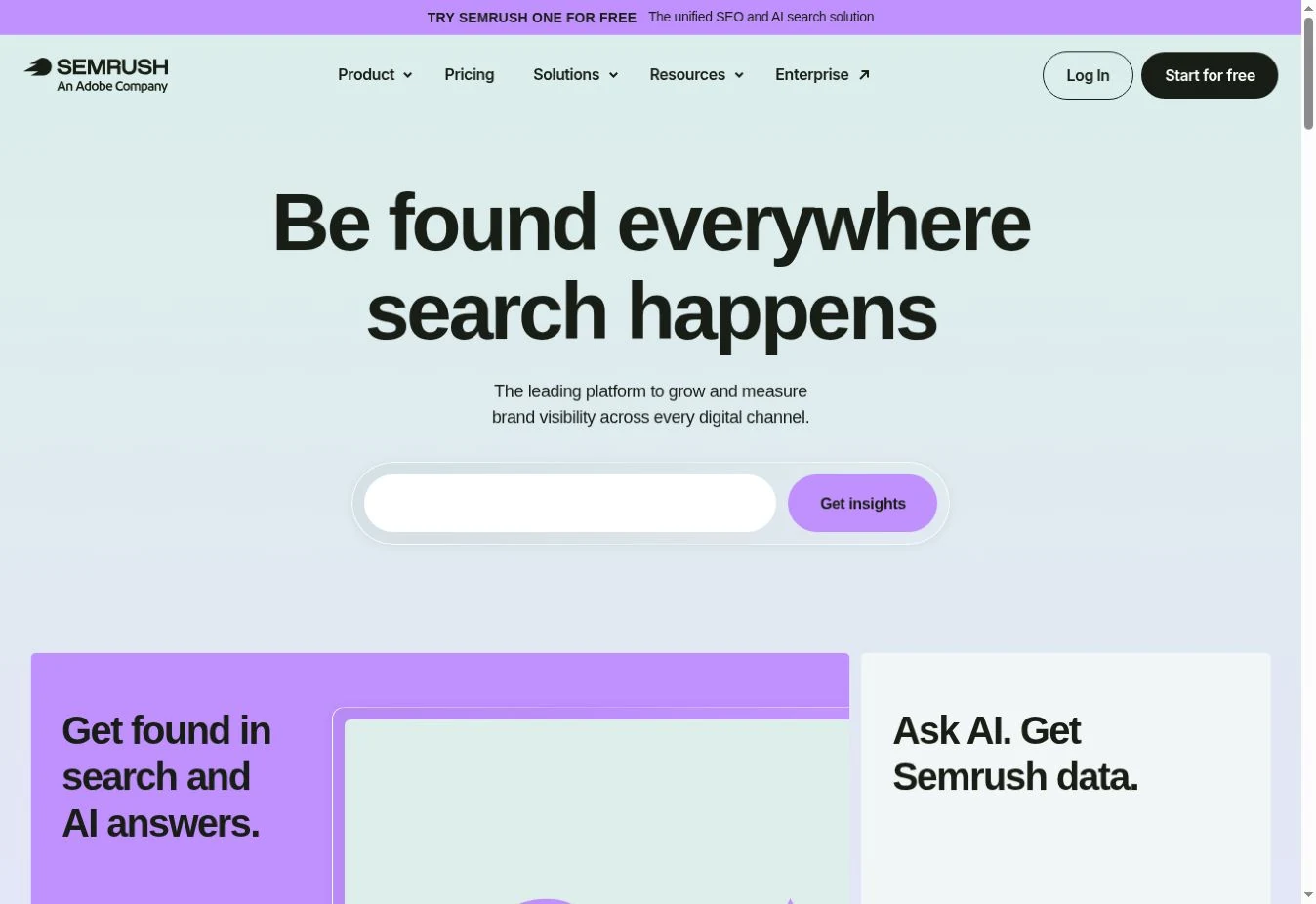
What it does: Semrush combines keyword research, competitor analysis, position tracking and site auditing. Its SEO + AI Search Starter plan also lists custom prompt monitoring and AI brand performance reporting.
Best for: Agencies combining SEO research and AI search reporting.
Strength: A useful shortlist choice when one team needs research and reporting in the same account. Limitation: Compare the SEO-only plan with the combined bundle. Prompt limits, tracked domains and extra users affect the total cost.
Pricing: SEO: $139/month. SEO + AI Search Starter: $199/month; annual discounts available. Check the official features and pricing.
Example workflow: For a Chennai training website, research course queries, inspect competing pages and monitor a separate set of non-branded AI recommendation prompts.
2. Ahrefs Brand Radar for AI brand mentions and citation research
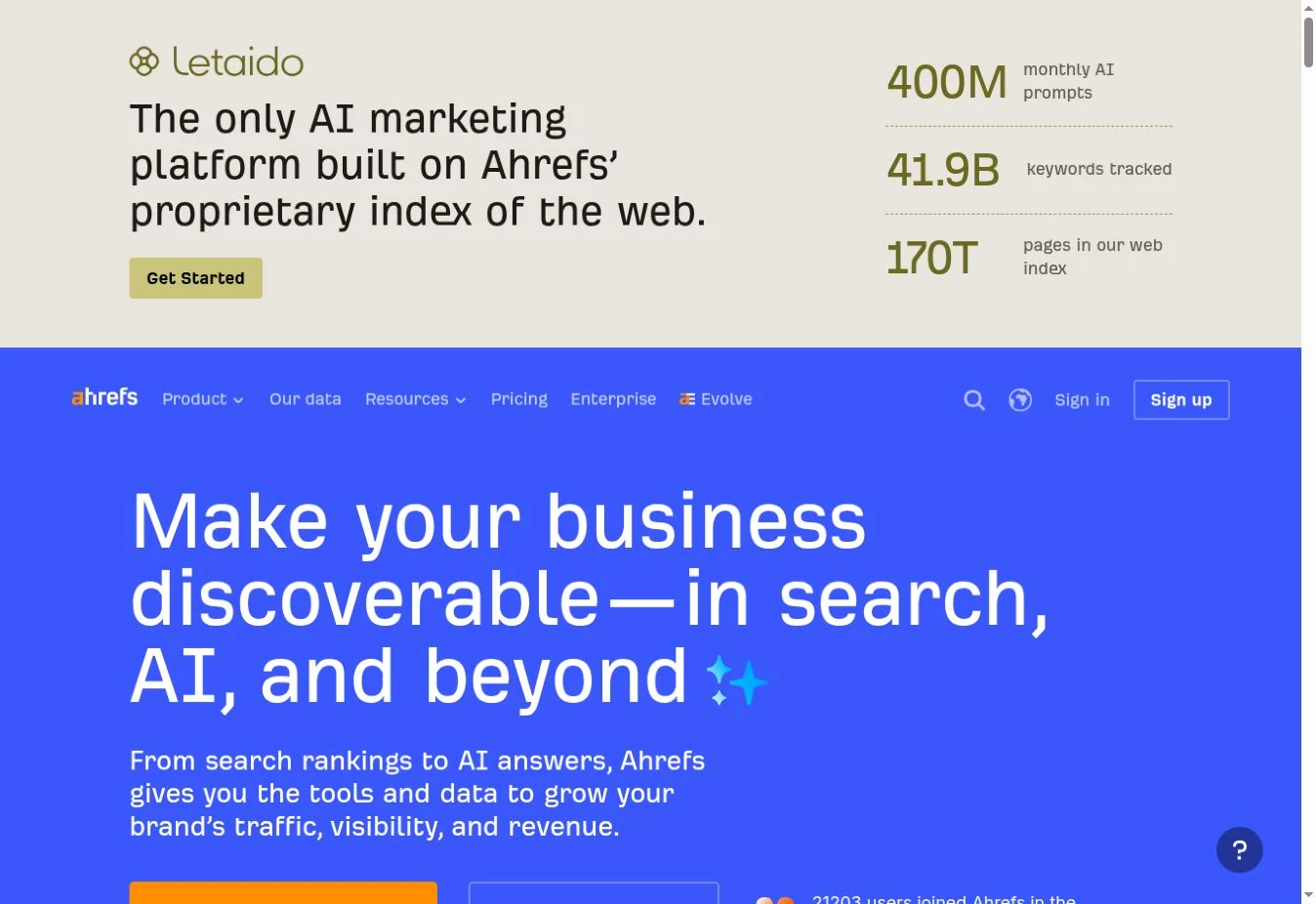
What it does: Brand Radar separates custom prompt tracking from its pre-collected AI visibility index. It offers brand mention and citation research, competitor comparisons and visibility exploration.
Best for: Teams investigating AI mentions, citations and competing brands.
Strength: Useful for finding which topics and sources already feature a brand. Limitation: A database built from modeled search prompts may have limited coverage for small or newly launched brands. Included checks and separately priced products must be distinguished.
Pricing: Custom prompt tracking starts at $50/month; AI Visibility Index starts at $199/month. Some checks are included with eligible Ahrefs subscriptions. Check the official features and pricing.
Example workflow: Track buyer questions directly rather than expecting an unknown academy to appear in broad database reports immediately.
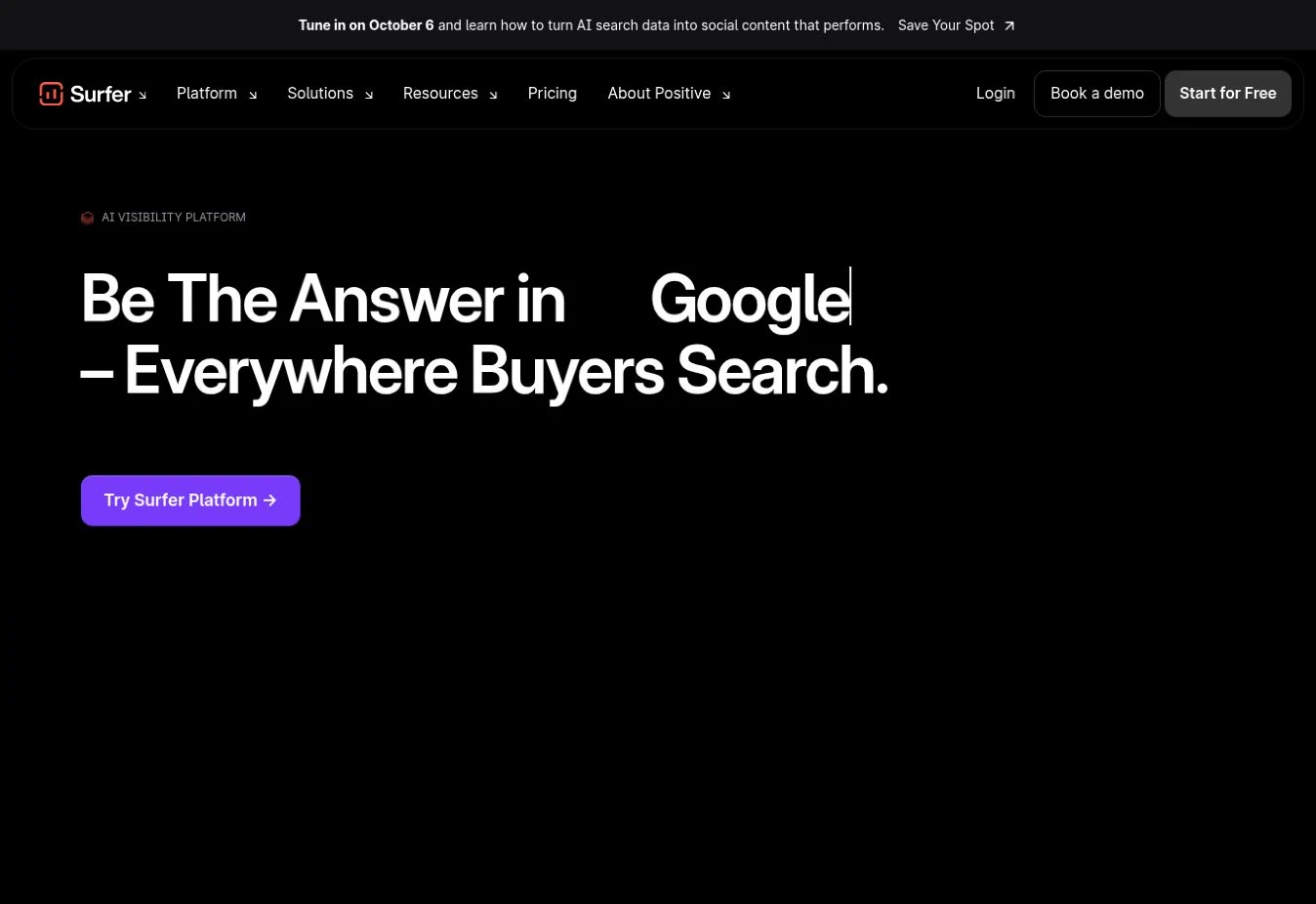
3. Surfer for AI-assisted content optimization and editorial workflows
What it does: Surfer offers content optimization, an AI writing assistant and content scoring. AI search analytics and tracking allowances differ by package.
Best for: Writers and content teams improving existing articles.
Strength: Useful when writers need one place to draft, review recommendations and refresh content. Limitation: A higher content score is a software assessment, not proof of ranking improvement. Select a tracking-enabled plan if AI monitoring is the main requirement.
Pricing: The retrieved page displays Discovery at €49/month and Standard at €99/month, both billed yearly. Currency and monthly billing can differ. Check the official features and pricing.
Example workflow: Refresh an existing tools article using relevant topic suggestions, then remove recommendations that do not help the reader.
4. Clearscope for search-intent content recommendations and AI query tracking
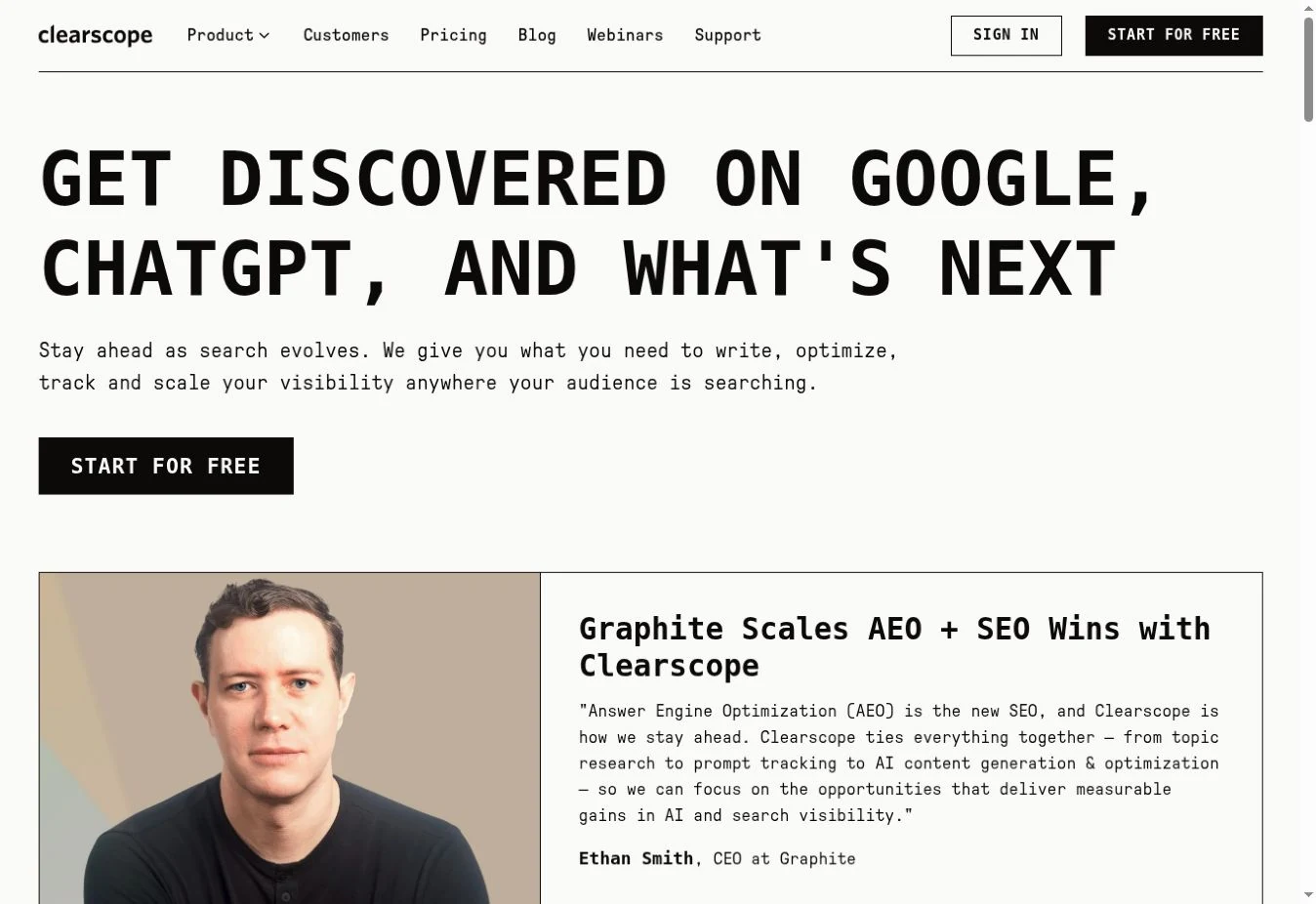
What it does: Clearscope lists search-intent recommendations, topic explorations, drafts, page monitoring and query tracking across ChatGPT and Gemini.
Best for: Editorial teams managing content and tracked queries.
Strength: A practical option for teams connecting editorial decisions with search and AI visibility monitoring. Limitation: Page, draft and query limits matter more than the headline subscription alone. It should not be treated as a substitute for a technical crawl.
Pricing: Essentials: $129/month. Business: $399/month. Additional usage can increase the bill. Check the official features and pricing.
Example workflow: Use the same course-selection query across a content refresh and a tracking report, keeping the target audience consistent.
5. MarketMuse for topical coverage and content inventory planning
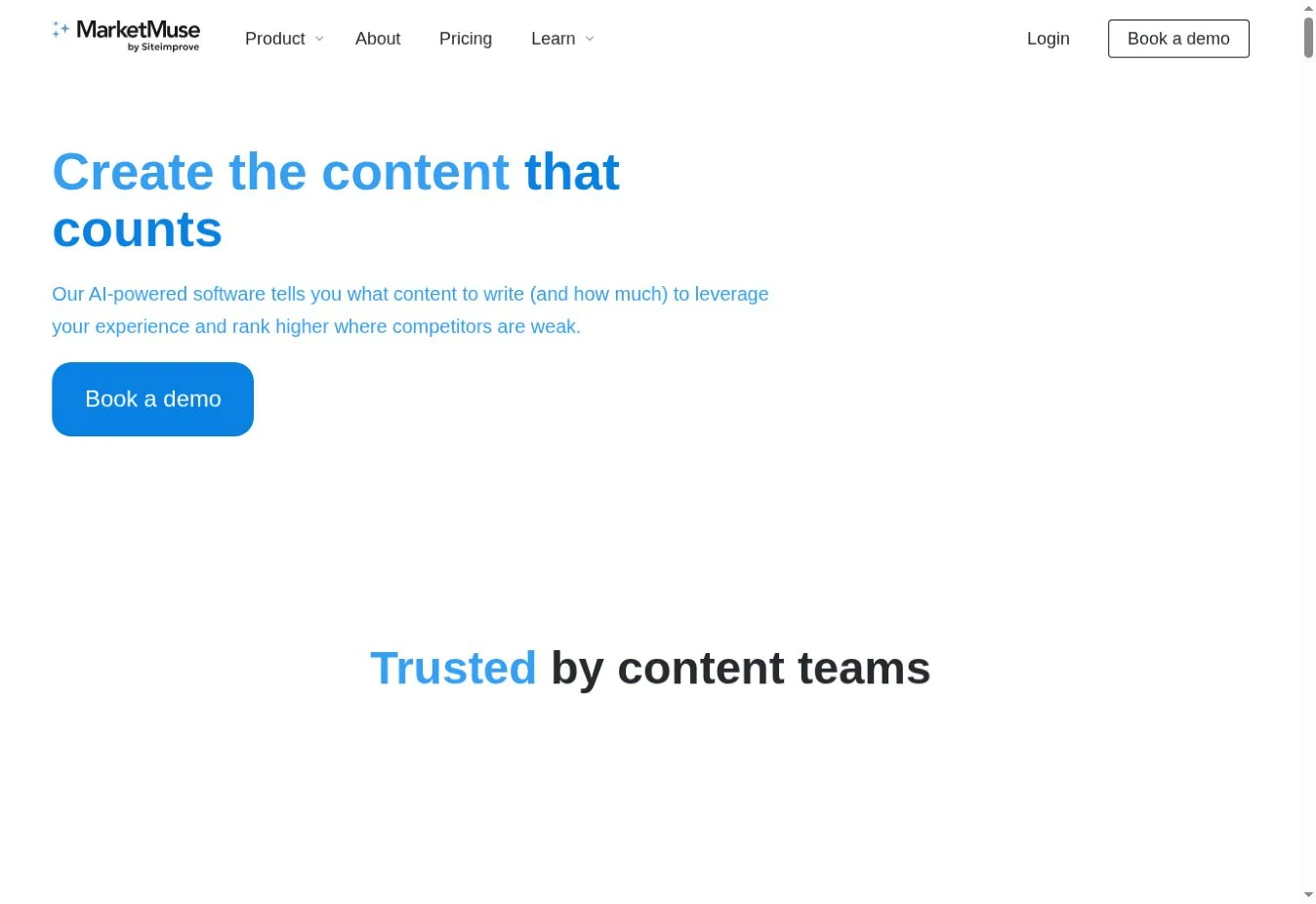
What it does: MarketMuse provides topic modeling, content briefs and inventory-based planning in its paid packages. Its published comparison includes topic and research allowances.
Best for: Content strategists deciding what to create or improve.
Strength: Useful when the main problem is an unorganized content library rather than slow drafting. Limitation: The free package excludes the full site inventory. Paid scope and available briefs vary by plan.
Pricing: Free plan: one user and 10 queries/month. Paid Optimize, Research and Strategy packages require confirmation with the vendor; a numeric price was not shown in the retrieved page. Check the official features and pricing.
Example workflow: Group existing course articles by intent before deciding whether another Chennai course list would add a distinct benefit.
6. Frase for SEO research, AI drafting and content publishing
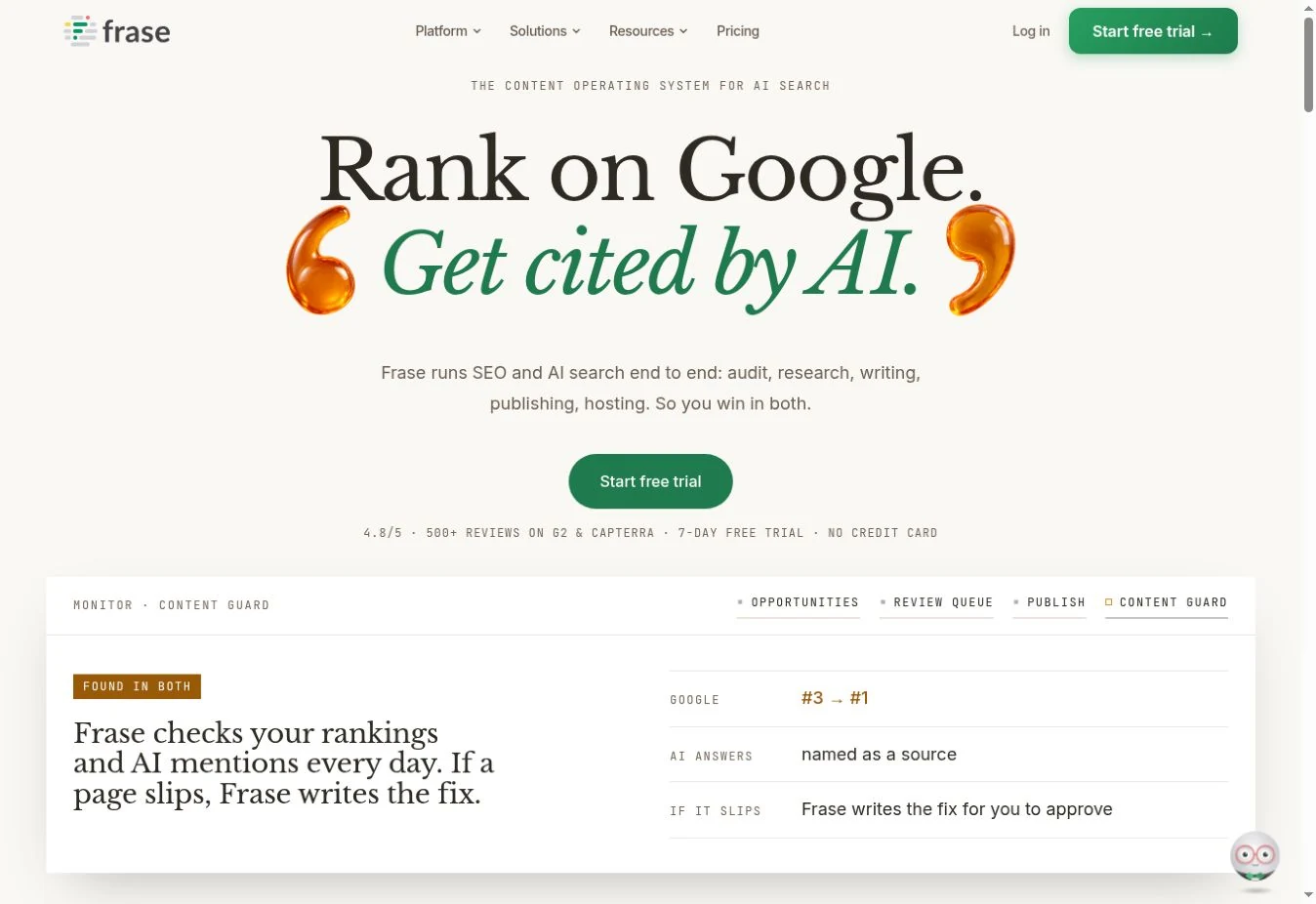
What it does: Frase combines SEO research, content optimization, AI drafting and CMS publishing. Its plans also include AI visibility features with engine coverage varying by tier.
Best for: Freelancers and teams building a research-to-publication workflow.
Strength: Useful for keeping research, writing and publishing within a connected workflow. Limitation: Article, audit-page, site and seat limits must match your workload. Automatic publishing still needs a clear editorial review policy.
Pricing: Starter: $49/month on monthly billing or $39/month billed yearly. Higher tiers increase article, site and audit allowances. Check the official features and pricing.
Example workflow: Build a tool comparison draft from documented features, check every factual claim and approve the final version before publishing.
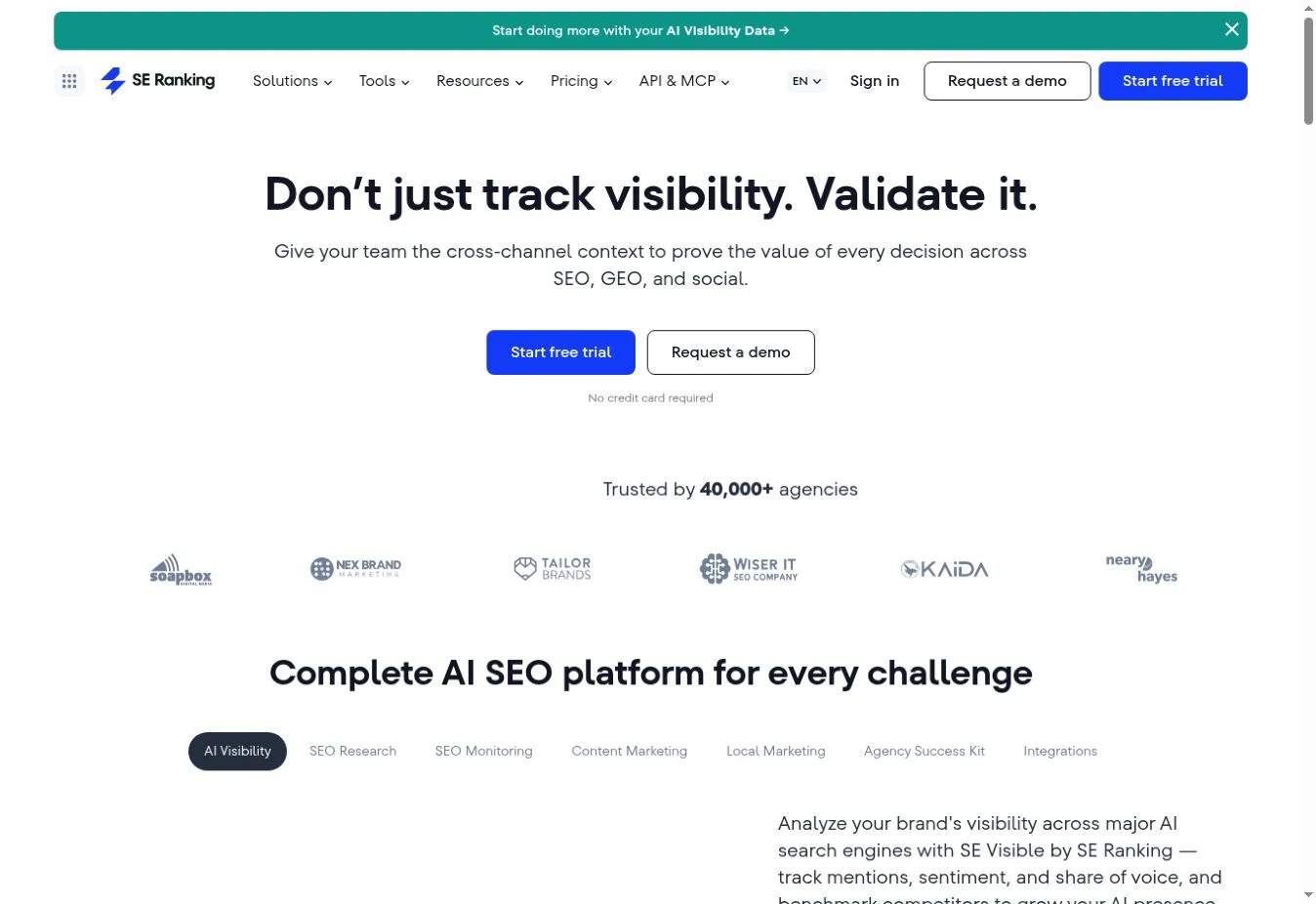
7. SE Ranking for SEO rank tracking and GEO project reporting
What it does: The Core package lists rank tracking, keyword and competitor research, website audits and prompt tracking. Project capacity and reporting features increase on higher plans.
Best for: Marketing teams managing repeatable SEO and GEO work.
Strength: A reasonable shortlist option for teams monitoring both search rankings and AI prompts. Limitation: Verify project, manager-seat, keyword and prompt allowances before comparing it with another suite.
Pricing: Core: $129/month or $103.20/month with annual billing. Growth: $279/month or $223.20/month with annual billing. Check the official features and pricing.
Example workflow: Keep Chennai keyword rankings and AI recommendation prompts in separate reports so one type of visibility does not stand in for the other.
8. Ubersuggest for beginner keyword research and AI search insights
What it does: Ubersuggest offers keyword ideas, intent data, competitor research, site audits and rank tracking. The plan comparison also lists AI search visibility and prompt insights.
Best for: Students and smaller teams learning research and reporting.
Strength: Useful for learning how keyword research, competitor pages and content decisions fit together. Limitation: Search and traffic metrics are estimates. AI prompt quantities and refresh frequencies differ between plans.
Pricing: Limited free access and paid or lifetime offers are available. Exact checkout pricing was not reliably visible in the retrieved plan cards; confirm the current offer. Check the official features and pricing.
Example workflow: Investigate a supporting query before adding it to the blog calendar, then compare the intent with existing posts.
9. Scalenut for keyword clusters, GEO content and article refreshes
What it does: Scalenut lists keyword clusters, GEO article creation, existing-content optimization and AI visibility monitoring. Prompt allowances and supported engines depend on the package.
Best for: Small content teams connecting clusters with GEO content workflows.
Strength: Useful when one team wants to move from a cluster to a draft and subsequent refresh. Limitation: The promotion and doubled allowances are time-sensitive. Do not assume entry-level engine coverage matches the higher-tier package.
Pricing: Starter is displayed at $59/month before a limited promotion. Confirm the selected billing term and promotional conditions at checkout. Check the official features and pricing.
Example workflow: Separate an informational AI SEO guide from a commercial software comparison before generating either article.
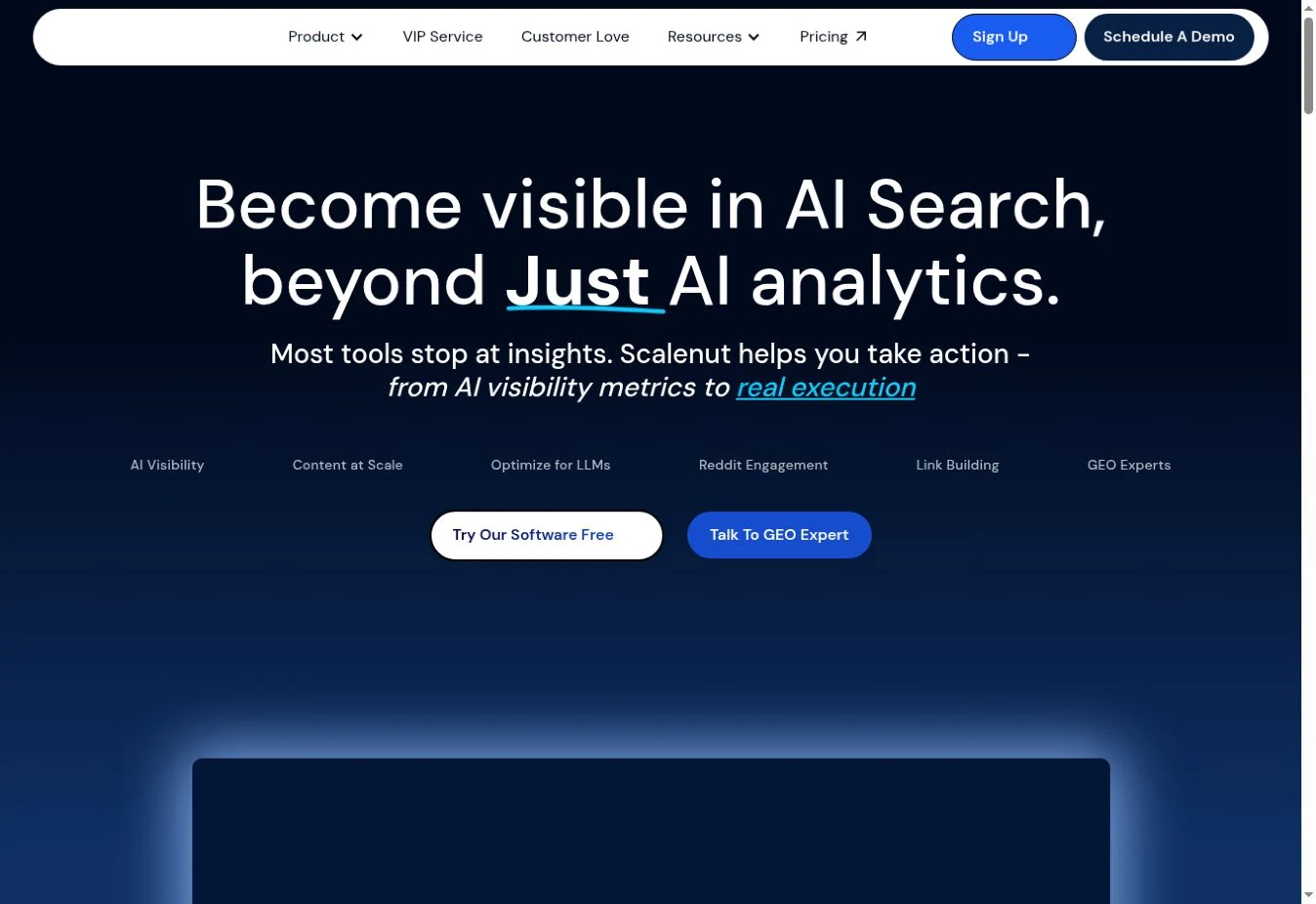
10. Writesonic for AI search tracking with content and site audits
What it does: The Starter package lists monitoring across ChatGPT, Gemini and Google AI Overviews, alongside AI articles and site audits. Higher plans expand capabilities.
Best for: Teams linking AI visibility reporting with content production.
Strength: Useful for teams that want a tracking and content workflow in one platform. Limitation: Seats, projects, article quantities, audit size and access to agentic features vary. Do not assume every automation is included in Starter.
Pricing: Starter is displayed at $79/month billed annually. Confirm monthly billing separately. Check the official features and pricing.
Example workflow: Use a visibility gap as a research starting point, then validate whether a useful page or a refresh is the appropriate response.
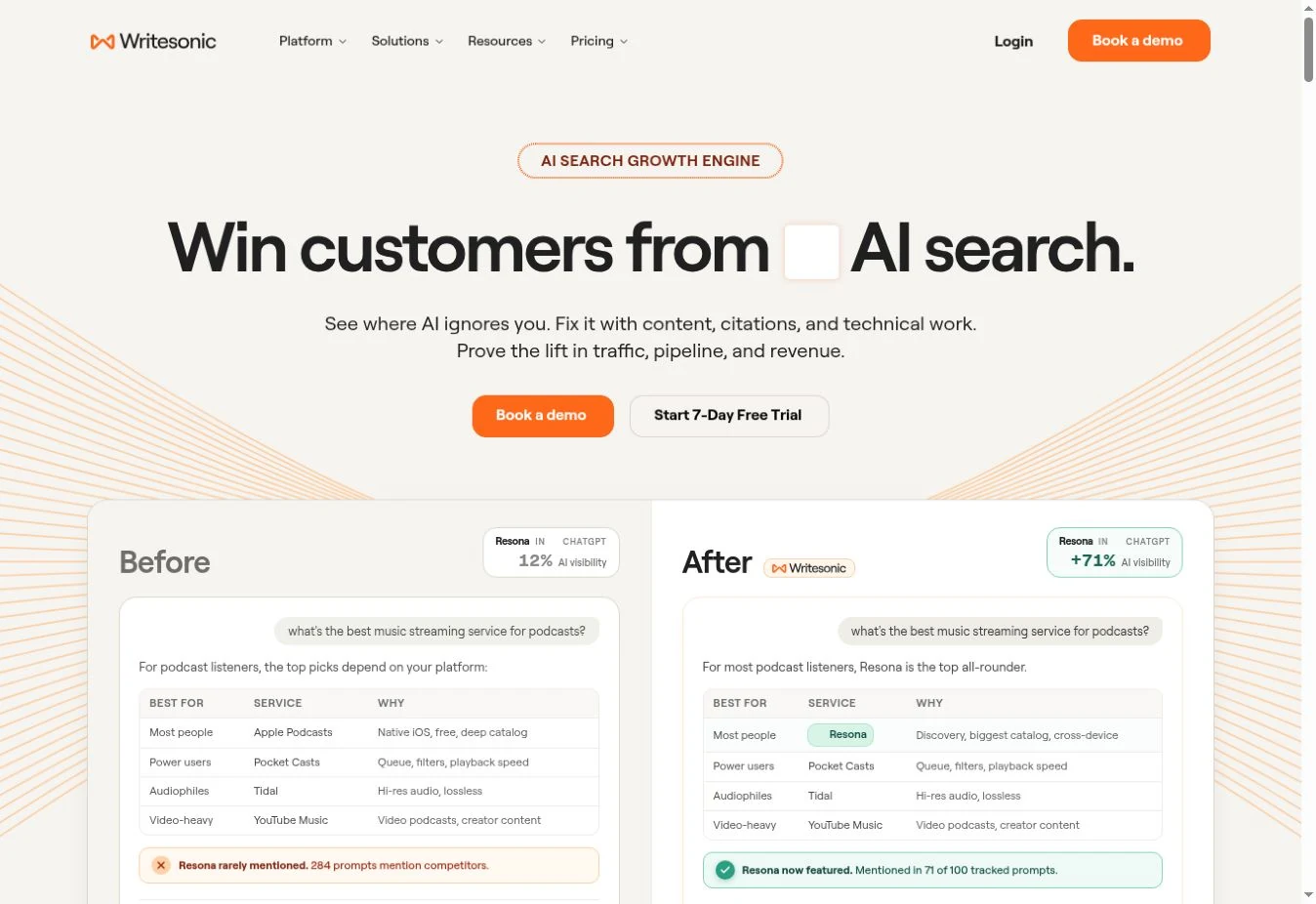
11. Screaming Frog for technical SEO crawling with AI integrations
What it does: SEO Spider audits links, titles, metadata, directives and duplicates. The paid feature list includes AI integrations and JavaScript rendering.
Best for: Technical SEOs diagnosing pages before optimizing content.
Strength: Useful for checking whether content can be crawled and for exporting an auditable list of issues. Limitation: It is a crawler rather than an AI citation tracker. Advanced features need a licence, and AI-provider usage may involve separate costs.
Pricing: Free version crawls up to 500 URLs. The retrieved page displays the paid licence at €245/year; other currencies are available. Check the official features and pricing.
Example workflow: Check the existing article’s status, canonical and internal links before interpreting weak visibility as a writing problem.
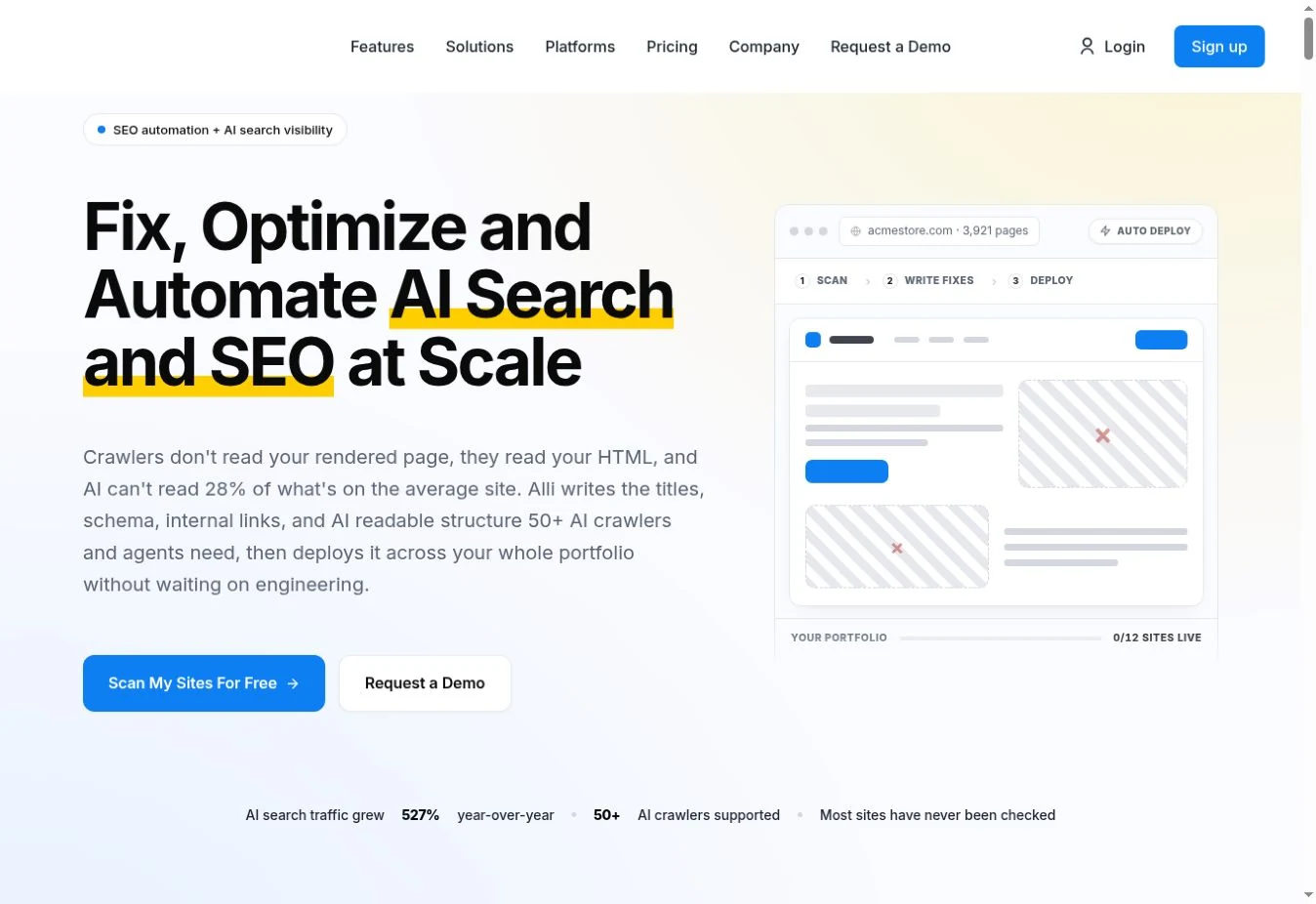
12. Alli AI for controlled on-page SEO automation across websites
What it does: Alli AI offers on-page automation, a visual SEO editor, internal linking automation and schema tooling. Its pricing page also lists AI crawler and traffic-monitoring features.
Best for: Agencies implementing repeatable website optimization rules.
Strength: Useful when repeated implementation work is slowing down a multi-site team. Limitation: Changes still need QA. Check site and page allowances, rendering behavior and rollback options before deploying rules broadly.
Pricing: Business: $299/month on monthly billing; the annual option displays approximately $249/month with $2,990 billed annually. Check the official features and pricing.
Example workflow: Approve a limited set of title fixes on a small group of URLs, verify the output and expand only after review.
13. Profound for enterprise AI search insights and marketing workflows
What it does: Profound lists answer-engine insights, prompt tracking, AI marketing workflows and agent analytics. The enterprise package includes tailored tracking and organizational controls.
Best for: Organizations coordinating AI search research and team workflows.
Strength: Useful for teams that need coordinated research, reporting and governance. Limitation: Trial scope does not represent every enterprise capability. Compare the quoted tracking coverage, history and integrations with your actual requirements.
Pricing: A limited free trial is listed. Enterprise packages use custom pricing; obtain a written quote for the required scope. Check the official features and pricing.
Example workflow: Ask for reporting that separates brand mentions, linked citations and resulting website activity.
14. Peec AI for daily AI search monitoring across selected models
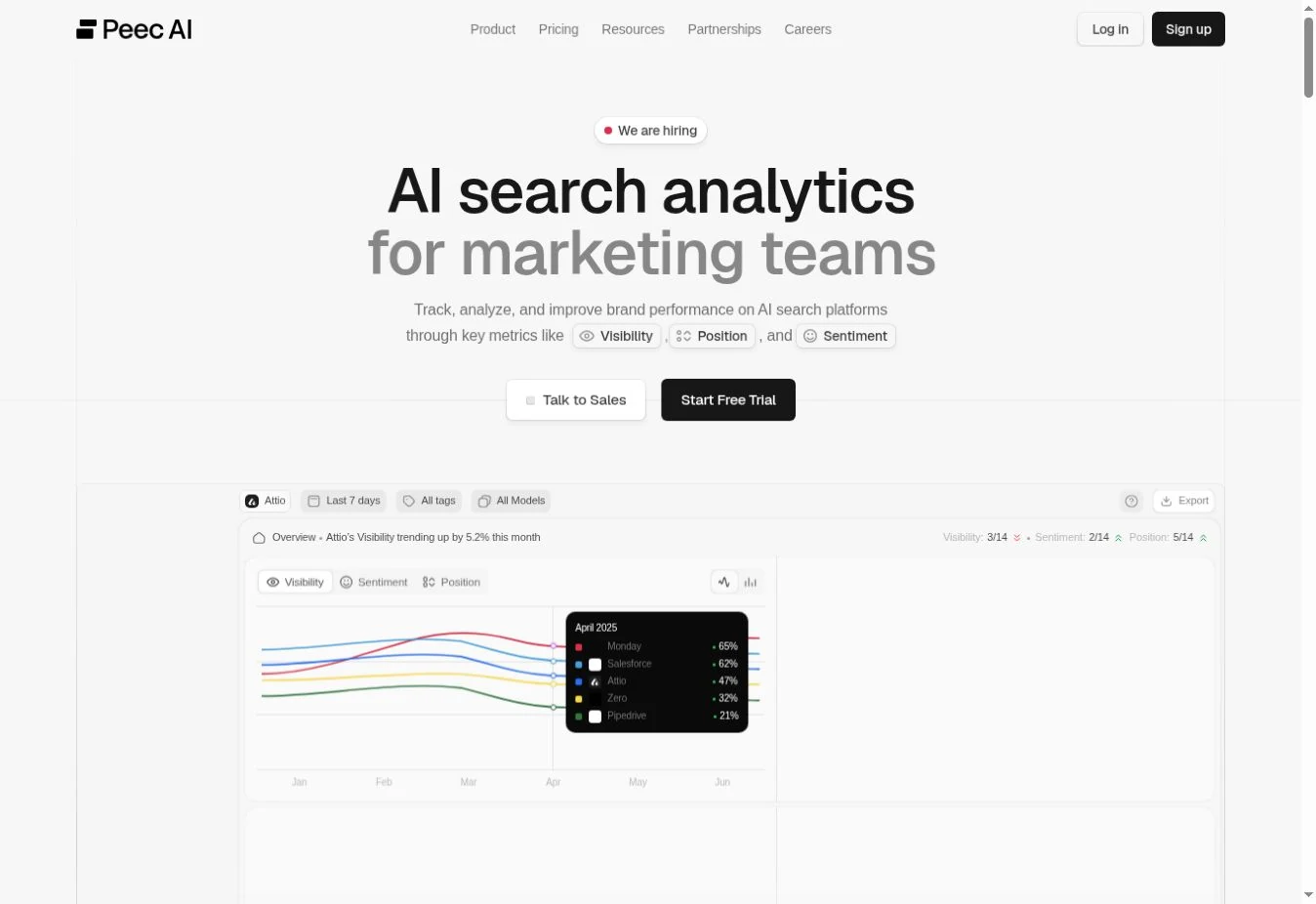
What it does: Peec AI’s Starter package lists 50 prompts, three selected models, daily tracking, one project and unlimited users. Higher tiers expand prompt and project capacity.
Best for: SEO teams tracking a consistent set of AI search questions.
Strength: Useful for maintaining a repeatable monitoring set across a team. Limitation: A three-model selection is not the same as every available model. Extra-model, market and project requirements should be checked.
Pricing: Paid Starter, Pro and Advanced packages are listed. Numeric prices were not available in the retrieved page text; confirm the live price with Peec AI. Check the official features and pricing.
Example workflow: Track the same non-branded shortlist questions over time and review the underlying answers before drawing conclusions.
15. OtterlyAI for small-team AI mention and citation monitoring
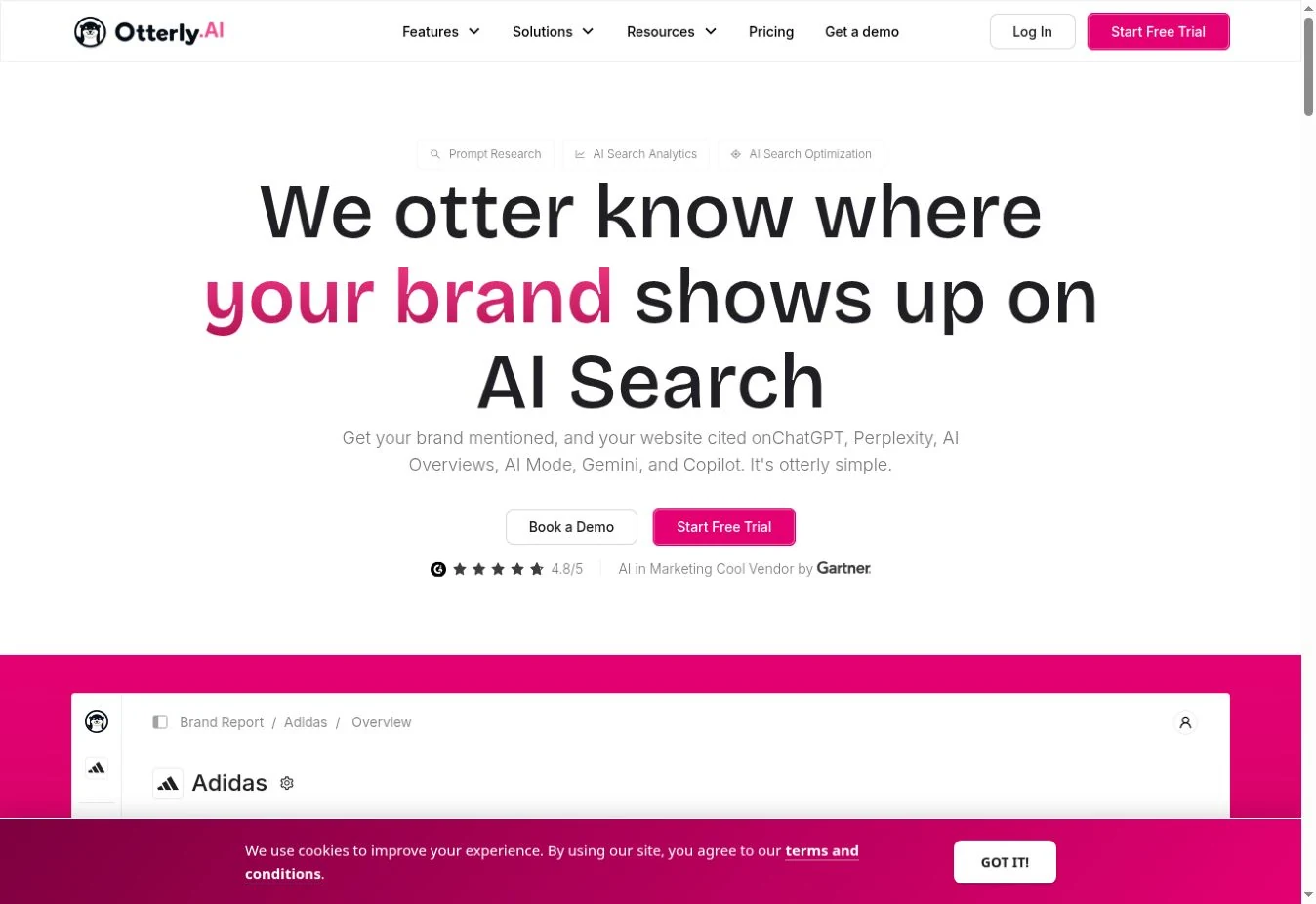
What it does: OtterlyAI lists daily monitoring, brand reporting, citation analysis and support for several AI search engines. Its Lite package includes four engines; others are add-ons.
Best for: Solo marketers starting with a small prompt set.
Strength: A practical option for a narrow monitoring pilot before committing to a larger platform. Limitation: Fifteen prompts give a limited sample. Engine add-ons can change the total cost and the comparability of reports.
Pricing: Lite: $29/month on monthly billing for 15 prompts. Additional engines and higher prompt quantities can cost extra. Check the official features and pricing.
Example workflow: Start with buyer questions that match your real customers rather than a long collection of near-identical prompts.

How to choose an AI SEO tool without paying for duplicate features
Write a short requirements list before starting a trial. Include the number of websites, editors, articles, keywords, markets and AI prompts you actually need. A low advertised price can become an expensive subscription when the relevant feature sits in an add-on or a higher tier.
- Define the decision: Do you need to choose a topic, improve a page, fix a technical issue or monitor citations?
- Check the input: Understand whether the report uses a crawl, a search database, a content model or sampled AI answers.
- Inspect the output: Look for exportable evidence, source URLs and underlying responses rather than a score alone.
- Confirm coverage: Test the language, location, website type and AI engine that matter to your audience.
- Calculate the full bill: Include annual commitments, users, API usage, extra sites and monitoring add-ons.
- Decide before renewing: Keep the tool only if it supports a useful recurring decision.
For Indian teams, confirm INR settlement costs and applicable taxes with the vendor or payment provider. This comparison does not convert currencies or assume a fixed exchange rate.
SEO, AEO and GEO tools: what each workflow can realistically improve
SEO focuses on helping relevant pages become discoverable and useful in search. AEO is a practical label for making answers clear and well supported. GEO commonly describes work on visibility in generative answers. These activities overlap; software categories are not separate guarantees of inclusion.
Google Search Central’s AI features guidance explains that established SEO practices still apply to AI Overviews and AI Mode. Eligible supporting pages must be indexed and eligible for a search snippet. Google does not require special AI files or a unique schema type for these features.
A useful workflow combines accessible pages, accurate text, relevant internal links and evidence readers can verify. A monitoring tool measures selected observations; it does not control how an answer engine selects sources. For more context, read our Google AI Mode optimization guide alongside the official documentation.
A practical AI SEO workflow for a Chennai course website
The following is an illustrative workflow, not a case study with measured traffic gains. Suppose an academy already has an AI SEO tools article and plans a similar comparison for the following week.
- Check the inventory: Compare the planned title, audience and search intent with the published article. If both answer the same buying question, refresh the existing page.
- Research the buyer’s questions: Identify requirements such as content editing, free access, pricing, AI prompt tracking and WordPress compatibility.
- Collect primary evidence: Open product documentation and pricing pages. Record the date, selected currency and billing term.
- Draft around decisions: Explain the task each tool supports, its limits and a realistic example. Link the source beside the claim.
- Review the page: Check the title, headings, canonical, image text, internal links and mobile table behavior.
- Measure after publication: Review organic search activity, enquiries and a consistent AI prompt set over time.
The goal is a clearer buying guide that offers something useful to a reader. Publishing a second URL with near-identical intent would make maintenance and measurement harder.
Which AI SEO tool stack suits students, freelancers and agencies?
Students: begin with limited free research access and a small technical crawl. Learn intent analysis, source checking and page improvements before paying for automation. Compare our Tamil digital marketing course checklist if you need a structured learning path.
Freelancers: choose one research suite or one editorial tool according to your deliverables. A client who needs audited research may benefit more from a clear brief than from automated publishing.
Agencies: compare project limits, shared access, reporting and client-specific prompt sets. Add a dedicated visibility platform when monitoring is a paid deliverable with a defined method.
Enterprise teams: evaluate governance, export options, integrations and tracking coverage through a scoped demo. Request a quote that separates software access from implementation services.
Whichever stack you select, keep human review responsible for factual accuracy, brand claims and the final publishing decision.
How to measure AI SEO results beyond a software score
Choose measures that match your business objective. For a course website, enquiries and applications matter alongside discovery. Record the measurement window, affected URLs and the changes made so future reports remain interpretable.
- Organic search: clicks, impressions and conversions for the relevant pages and query groups.
- Editorial quality: complete source checks, useful comparisons and corrections required before approval.
- AI mention rate: responses mentioning your brand divided by eligible sampled responses, multiplied by 100.
- AI citation rate: responses linking to your chosen domain or page divided by eligible sampled responses, multiplied by 100.
- Business outcomes: qualified enquiries and conversions associated with visits where attribution is available.
Define what counts as an eligible response and keep failed runs visible. Use the same prompts, engines, locations and refresh schedule for comparisons. Vendor metrics may use different denominators, so do not combine them as though they were identical.
Google reports activity from its AI search features within overall Web search performance in Search Console. A third-party sampled mention report and actual website traffic answer different questions.
Which AI SEO tool is best for a small marketing team?
Choose around the team’s main task, existing skills and budget. A combined research suite may suit varied work, while an editorial platform fits content production. Compare usage limits, collaboration options and the actual deliverables you need.
Are free AI SEO tools enough for beginners?
Free access can help you learn keyword research, crawl checks and content planning. Limits vary by product and feature. Begin with a defined practice project, then pay only when a specific restriction prevents useful work.
Can AI SEO software guarantee Google rankings or ChatGPT citations?
No tool can guarantee rankings or citations. Software supports research, editing, implementation and measurement, while search engines and AI platforms determine results. Evaluate improvements through consistent observations, relevant website traffic and qualified enquiries over time.
What should I check before buying AI visibility software?
Check supported engines, prompt limits, locations, languages, refresh frequency, historical data and exports. Ask how the vendor distinguishes mentions from citations. Inspect raw responses and define a repeatable prompt set before treating dashboard changes as meaningful.
Should I refresh an existing AI SEO comparison or publish another one?
Refresh the existing article when it answers the same buying question for the same audience. A new page needs a distinct purpose and useful information. Preserve an established URL when updating features, pricing and recommendations.
How are AI mentions different from citations in visibility reports?
A mention names your brand, while a citation points readers toward a source, often through a link. Vendors may classify these differently. Define the eligible response set and review examples before comparing rates across reporting platforms.
Why do AI SEO tool prices vary between monthly and annual plans?
Annual billing often displays a monthly equivalent for an upfront commitment. Monthly billing usually provides more flexibility. Compare the currency, total amount due, renewal terms, usage allowances and extras before deciding which plan fits your needs.
Do content optimization scores measure the quality of an article?
Content scores reflect a vendor’s selected checks and comparison method. They do not establish factual accuracy, originality or reader usefulness. Use recommendations as editing inputs, then review sources, clarity, completeness and the decisions the article supports.
When should a freelancer add a dedicated AI visibility tracker?
Add a tracker when monitoring becomes a defined client deliverable with an agreed prompt set, reporting period and decision process. First confirm that the chosen platform covers relevant engines, markets and exports within your project budget.
Which skills should students learn before paying for AI SEO automation?
Learn search intent, source checking, clear writing, basic crawl analysis and measurement before buying automation. These skills help you evaluate recommendations and identify mistakes. Practice on a small website, record changes and review outcomes consistently.
Learn how to use AI SEO tools with a practical training plan
A subscription becomes useful when you can turn its output into a clear action: selecting an appropriate topic, improving a source-backed answer, fixing a crawl issue or measuring visibility responsibly.
Explore the ZenX Academy AI digital marketing syllabus and our guide to digital marketing skills in Chennai to connect software practice with broader skills. Ask the academy about current modules, learning format, mentor support and fees before enrolling.
View the digital marketing course and enquire about the current batch.
Official sources used for this AI SEO tools guide
Product features and displayed pricing were checked on 1 October 2026. These official pages support product descriptions, not independent claims about ranking improvements.
- Semrush: official product / pricing page
- Ahrefs Brand Radar: official product / pricing page
- Surfer: official product / pricing page
- Clearscope: official product / pricing page
- MarketMuse: official product / pricing page
- Frase: official product / pricing page
- SE Ranking: official product / pricing page
- Ubersuggest: official product / pricing page
- Scalenut: official product / pricing page
- Writesonic: official product / pricing page
- Screaming Frog SEO Spider: official product / pricing page
- Alli AI: official product / pricing page
- Profound: official product / pricing page
- Peec AI: official product / pricing page
- OtterlyAI: official product / pricing page
- Google Search Central: AI features and your website
Where numeric pricing was not available in the retrieved page text, that limitation is identified beside the product. Confirm current terms on the linked page before purchasing.
Explore ai tools for marketing & seo
Choose tools by task, compare SEO platforms and investigate free AI marketing options.