

Direct answer: Ahrefs suits teams prioritizing competitor research, backlink analysis and flexible AI prompt monitoring. Semrush suits teams wanting SEO and AI visibility within a combined subscription. Choose by your actual projects, reporting needs, tracking frequency and total cost; neither is universally better.
Checked: October 1, 2026. This comparison uses current official product pages and documentation. Recommendations are editorial judgments based on workflow fit, not results from a firsthand product benchmark. Prices and plan names can change.
Choosing between Ahrefs and Semrush starts with a practical question: which subscription helps you make useful decisions every week? A student learning keyword research, a Chennai business managing one website and an agency monitoring several clients need different limits. This guide compares the work, explains the AI visibility options and gives you a repeatable way to evaluate your shortlist.
Ahrefs vs Semrush: what is the quick buying verdict?
Quick verdict: Shortlist Ahrefs when competitor pages, linking domains and topic research drive your weekly work. Shortlist Semrush when combining search monitoring with a defined AI prompt programme is the priority. Confirm the necessary features on the exact plan before deciding. These are use-case recommendations, not a measured ranking of the products.
For a wider shortlist beyond these two vendors, explore our AI SEO tools buying guide. This page focuses on the head-to-head purchase decision. It does not assume that you need both subscriptions or that either dashboard can replace your own business judgment.
Which SEO features should you compare side by side?
Use the same criteria for both products: research depth, keyword relevance, backlink investigation, technical issue handling, tracking cadence, AI measurement and operating cost. The table below summarizes documented capabilities qualitatively. It contains no speed, accuracy or return-on-investment scores. Detailed official sources appear beside the relevant sections.
| Buying criterion | Ahrefs | Semrush | What to check |
|---|---|---|---|
| Keyword research | Keywords Explorer | Keyword research and topic planning | Country, intent, useful export |
| Competitor links | Site Explorer backlink profile | Backlink analysis and gap research | Relevant referring pages |
| Technical audits | Site Audit | Site Audit | Actionable fixes on your site |
| Tracked search rankings | Rank Tracker; weekly base updates | Position Tracking; daily plan updates | Required cadence and locations |
| AI measurement | Brand Radar index and custom prompts | AI Visibility and bundled SEO + AI Search | Research coverage versus your prompt set |
| Purchase structure | SEO plans plus optional AI products | SEO, combined plans and separate AI toolkit | Complete cost for your workflow |
How does Ahrefs support competitor and backlink research?
The official Ahrefs Site Explorer page describes organic search research, backlink profiles and paid-search investigation. You can investigate competing pages and the sites linking to them. That makes it a sensible candidate when a research assignment begins with understanding why another website attracts attention.
A useful evaluation task is to select three relevant competitors and identify a handful of referring pages worth reading. Ask whether each page reaches your audience, whether the link has a meaningful editorial context and whether your business could contribute something useful. A long export is less valuable than a short list you can explain.
Do not turn a competitor backlink list into a bulk outreach campaign. Review the underlying pages and record the reason each opportunity matters. Similarly, estimated competitor traffic is planning evidence, not access to their private analytics. Our recommendation is to evaluate the quality of the decisions you can make from the research, rather than choosing solely because a vendor advertises a large index.
How does Semrush support backlink gap analysis?
The Semrush backlink features page describes backlink profile analysis and finding domains that link to competitors but do not link to you. These capabilities support a comparable investigation: start with relevant rivals, inspect referring pages and decide which relationships are worth pursuing.
Keep the task identical when comparing products. Use the same domain, competitor set and country context. Separate links that help customers from links that merely increase a spreadsheet total. Record whether the report gives you enough context to reject unsuitable opportunities before contacting anyone.
Neither product earns an automatic win from a domain-level score. If your weekly work requires a clear report for a client, assess whether you can connect a specific opportunity to a useful page, a relevant audience and a credible next action. That is a practical comparison criterion you can test without pretending that a bigger database guarantees better outcomes.
Which keyword research workflow fits your content planning?
Ahrefs Keywords Explorer documentation describes keyword ideas, Parent Topic, Traffic Potential and SERP analysis. Semrush keyword research features describe discovering queries, assessing competition, grouping topics and mapping research to content. Both merit evaluation against the same content brief.
For a hypothetical Chennai service business, begin with what customers ask before making an enquiry. Group those questions by task and buying stage. Then compare the actual pages appearing for each query. A national informational article and a local service page may answer different needs even when their keywords overlap.
Choose the workflow that makes it easier to explain why a page should exist, which question it answers and how it differs from your existing content. Avoid selecting an article only because a difficulty score looks low. Scores and estimates should inform a decision; they should not become the decision.
Before creating pages, map one main intent to one suitable destination. Combine closely related questions when they belong in the same explanation. Keep genuinely different buying tasks separate. The deliverable should be a usable content map with reasons for each page, rather than hundreds of disconnected keywords waiting for someone else to interpret them.
How should you compare technical SEO audit tools?
Ahrefs Site Audit documents checks involving indexability, redirects, links, duplicate fields and other technical issues. Semrush Site Audit features describe severity-based issue lists and thematic reports. Both provide a starting point for investigating technical problems.
Test the same permitted website and a comparable crawl scope. Select one important issue and follow it through to a proposed fix. Can you locate the affected URLs, explain the impact and give a developer a precise action? After implementation, recrawl and confirm that the issue has actually changed.
A site health score is a summary to investigate. It should not override business priorities. A broken enquiry page may deserve attention before a cosmetic warning affecting an old article. Also check crawl limits before subscribing, especially when a catalogue creates many URLs.
For a small team, audit usefulness depends on ownership. Assign each accepted issue to a person, include a deadline and describe how completion will be verified. An attractive dashboard cannot repair a redirect chain or restore missing content by itself. Prefer the workflow your team can sustain after the first enthusiastic audit.
Does daily or weekly rank tracking matter for your website?
Ahrefs Rank Tracker lists weekly base updates. Semrush rank tracking features describe daily updates and monitoring across location and device contexts. Check the purchased plan and any optional upgrade before assuming a particular cadence.
Daily observation can be useful when a campaign or client agreement requires frequent monitoring. Weekly tracking may be sufficient when your team reviews priorities once a week. More frequent data is useful only when someone has time to interpret it and decide whether action is warranted.
Define the tracked keyword groups in advance: brand, service, comparison and informational terms. Keep country, location, device and target page consistent. When a position moves, inspect the context and recent changes before rewriting content. A report should explain a pattern and its business relevance, rather than generate a new task after every small fluctuation.
How does Ahrefs Brand Radar measure AI visibility?
Ahrefs Brand Radar separates a pre-collected AI Visibility Index from custom prompts you select. Index research helps investigate topics, brands and cited pages already represented in the dataset. Custom tracking monitors a specific set of questions relevant to your business. Those are related but different measurement tasks.
The Ahrefs custom prompt setup guide explains using a saved report, selecting platforms and locations, and configuring tracking. Plan capacity depends on checks, so estimate the consumption of your intended setup before purchase. Different platform rules can affect usage.
For a hypothetical new local business, begin with a small set of genuine buyer questions. Include comparisons, eligibility questions and specific service needs. A broad industry index may not contain enough relevant examples for a newly established brand. That does not mean the business is invisible everywhere.
Judge the monitoring setup by whether it answers an actionable question: which relevant answers mention the brand, which pages are cited and what information appears incomplete? Keep the prompt wording and observation settings stable while evaluating changes. The output should lead to a content or reputation investigation, not a promise that a subscription will create citations.
How does Semrush combine SEO with AI visibility monitoring?
The Semrush AI Visibility Toolkit documentation describes visibility overview, competitor research, prompt research, brand performance, prompt tracking and AI search checks. Semrush also sells combined SEO + AI Search plans. Confirm which reports, domains and prompt limits your chosen subscription actually includes.
A combined workflow can suit a team that needs one reporting routine for conventional search and AI answers. That is an operational advantage to assess, not evidence that the underlying AI observations are more accurate than another vendor’s. Evaluate the same buyer questions and ask how easily a colleague can explain the report.
For teams serving India, the documentation lists India among available regions for several research reports. That does not establish complete coverage of every city, language or custom tracking configuration. Check the actual report and settings you need before paying.
If AI measurement is new to your team, our answer engine optimization guide explains the content principles behind this work. Use the software to observe and investigate; keep improvements grounded in information customers need and claims your business can support.
Why should you separate AI mentions, citations and business results?
A brand mention, a citation to a page and a qualified enquiry represent different observations. Decide which one your report measures before comparing percentages. A vendor’s visibility score can be useful within a consistent measurement setup, but scores from different systems should not be treated as interchangeable.
Create a simple measurement record for every prompt: exact wording, selected platform, region, observation date, brand mention, cited page and any factual problem in the answer. Keep the saved response when your subscription allows it. This makes later discussions more concrete than arguing about an isolated summary score.
For example, an answer might describe your service accurately without sending a visit. Another might cite a page while omitting the feature a customer needs. The next action differs in each case. One requires checking the customer journey; the other may require improving the explanation on the cited page.
Keep commercial outcomes in your own reporting process. Record enquiries and completed purchases using the measurement available to your business. Do not label all growth as an effect of AI visibility because a mention count increased. A tool purchase should improve the quality of your investigation, while outcome claims require separate evidence.
What are the current Ahrefs and Semrush prices?
Prices below are advertised US dollar rates checked on October 1, 2026. Monthly billing and annual equivalents are shown separately where verified. The plans are different packages, not equivalent tiers. For India, confirm the checkout total, currency conversion, applicable taxes and card charges before committing.
The Ahrefs pricing page lists Lite at $129/month with 750 tracked keywords and five tracked AI prompts, Standard at $249/month and Advanced at $449/month. Starter is $29/month with a narrower scope. Separate custom prompt packages start at $50/month; Brand Radar AI index access starts at $199/month.
The Semrush SEO + AI Search pricing page lists SEO at $139/month, Starter at $199/month, Pro+ at $299/month and Advanced at $549/month. Starter includes 500 daily tracked keywords, 50 daily tracked prompts and one domain for AI brand performance.
The separate Semrush AI Visibility pricing page displays Base at $99/month per domain and 25 tracked custom prompts. The annual view also displays $99/month billed annually. Verify the billing commitment rather than assuming that a monthly equivalent means a monthly payment.
| Plan | Monthly billing in USD | Annual equivalent, billed annually | Scope note |
|---|---|---|---|
| Ahrefs Lite | $129 | Not quoted here | SEO suite; plan limits apply |
| Ahrefs Standard | $249 | Not quoted here | Higher research and project limits |
| Ahrefs Advanced | $449 | Not quoted here | Higher capacity |
| Semrush SEO | $139 | $117.33/month | SEO plan; verify AI entitlement |
| Semrush Starter | $199 | $165.17/month | Combined SEO + AI Search |
| Semrush Pro+ | $299 | $248.17/month | Combined plan with higher limits |
| Semrush Advanced | $549 | $455.67/month | Combined plan with higher limits |
How do you calculate the total subscription cost?
Write down the jobs your team must perform, then cost the entire setup. Include the base subscription, additional users, extra projects or domains, prompt capacity, optional reporting and any usage-based charges you choose to enable. The cheapest advertised entry price may not support the workflow you actually need.
A hypothetical buyer might need one website, weekly competitor research and a small prompt set. Another might need several client websites, separate reports and frequent tracking. Do not compare the first buyer’s configuration with the second buyer’s bill and conclude that one vendor is inherently cheaper.
Use a three-column worksheet: required feature, included allowance and additional cost. Mark anything unclear for a vendor demonstration or support question. For annual subscriptions, record the full commitment and renewal conditions. For monthly subscriptions, check how cancellation affects access and the billing period.
Estimate value from a task you can observe. If your team can produce a clearer content brief or verify an important technical fix, record that improvement. Avoid forecasting a guaranteed revenue increase from the software fee. The buying decision should remain understandable even if search traffic stays unchanged during your first review period.
Which tool fits students, freelancers and agencies?
Students: Start with a supervised task and a clear deliverable before buying a large subscription. Learn to interpret a keyword report, inspect a referring page and explain an audit issue. Limited or demonstrated access can teach those foundations; a larger allowance does not automatically improve understanding.
Freelancers: Choose around the work you sell. If research and backlink investigation dominate, evaluate Ahrefs first against those tasks. If clients expect daily tracking and combined SEO and AI reporting, evaluate the appropriate Semrush package. These recommendations reflect the documented workflows, not a claim that one interface is easier for everyone.
Agencies and in-house teams: Audit project counts, seats, export needs and reporting obligations before choosing. A feature that only one specialist understands can become a handover problem. Ask another colleague to reproduce a report and explain its conclusion. Include the time needed for setup and maintenance in your evaluation.
For a hypothetical Tamil Nadu agency, the best fit may be the product that lets a colleague answer a client’s question clearly with a repeatable process. A second subscription becomes reasonable when you can name a missing capability and show how you will use it. Buying both at the outset can make learning and responsibility harder to manage.
What should you test before choosing Ahrefs or Semrush?
Run one controlled evaluation using the same website, competitors, keywords and intended market. Define success before viewing results: a useful content map, a short list of credible backlink opportunities, one verified technical issue and an AI monitoring setup that fits your budget. Use legitimate available access or request a demonstration.
First: Produce a content brief with a target audience, main question, competing pages and a reason the proposed page deserves to exist. Ask whether someone else could write from it without guessing the intended angle.
Second: Investigate an audit issue and specify the affected URLs, proposed change and verification method. Explain the priority in terms of the customer or business task. Do not merely copy a warning into a task list.
Third: Configure or demonstrate the intended tracking setup. Check project count, keyword cadence, prompt wording, platform options and reporting access. Record exclusions as carefully as features. A missing requirement can matter more than an impressive feature your team never uses.
Finally: Review the total cost and choose one product for an initial operating period with a defined review date. Continue only if the team actually uses it to make better decisions. Keep this evaluation record so a future upgrade or replacement has a clear reason.
How can you build SEO skills beyond software dashboards?
Overall, Ahrefs vs Semrush is a workflow decision. Choose the documented package that fits your current research and monitoring tasks, validate the required limits and leave room for review. Neither product replaces clear writing, accurate business information or the ability to explain why a website change matters.
If you want structured learning, explore the verified ZenX Academy digital marketing course in Chennai and ask about the current curriculum and tool access. Confirm those details directly before enrolling. The useful goal is learning to interpret evidence and execute improvements, rather than memorizing dashboard scores.
Is Ahrefs better than Semrush for every SEO task?
No. Choose according to the work you need to complete, the required limits and your reporting routine. Both offer research and monitoring capabilities. A controlled evaluation on your own website is more useful than a universal winner.
Which tool should a beginner learn first?
Learn the tool available through your course or legitimate account, then complete a small practical assignment. Focus on keyword intent, competitor pages and technical issue interpretation. Understanding those tasks matters more than mastering every dashboard immediately.
Can Ahrefs track custom AI prompts?
Yes. Ahrefs Brand Radar supports custom prompt tracking alongside its separate AI visibility index. Configure the relevant questions, platforms, locations and refresh settings. Check included allowances and usage rules before assuming that every setup fits one package.
Does Semrush include AI visibility in every SEO subscription?
Check the exact subscription. Semrush sells an SEO plan, combined SEO and AI Search plans, and a separate AI Visibility Toolkit. Their entitlements differ. Confirm the required reports, domains and custom prompt allowances on the current checkout.
Are the cheapest Ahrefs and Semrush plans equivalent?
No. Entry prices represent different feature packages and limits. Compare the tasks you need, then include seats, domains, tracking requirements and optional charges. An entry plan can be inexpensive while still missing a requirement essential to your work.
Should an Indian business convert dollar prices directly into rupees?
Use currency conversion only as an initial budget estimate. Confirm the actual checkout amount, billing period, applicable taxes and payment charges. Annual equivalent prices also need the full commitment recorded before you compare them with monthly payments.
Does an AI visibility score prove that a tool increased sales?
No. A score describes observations within a particular measurement system. Sales and enquiries require separate business evidence. Review prompt settings, saved answers and cited pages, then assess customer outcomes without attributing every change to the software subscription.
Is daily rank tracking always better than weekly tracking?
Daily tracking helps when your team needs frequent observations and can interpret them responsibly. Weekly tracking may suit a weekly review routine. Choose the cadence that supports an actual decision, rather than collecting more reports without a purpose.
Should a freelancer subscribe to both tools?
Start with the product that covers your main paid work. Add a second subscription only when you identify a specific missing capability and can justify its cost. Overlapping subscriptions can increase expense without improving the decisions you make.
How often should you review your SEO software subscription?
Set a review date when subscribing and check usage, deliverables, plan limits and total cost. Reassess after a client change or new requirement. Keep the tool when it supports useful work; upgrade only for a clearly defined need.
Which official sources support this comparison?
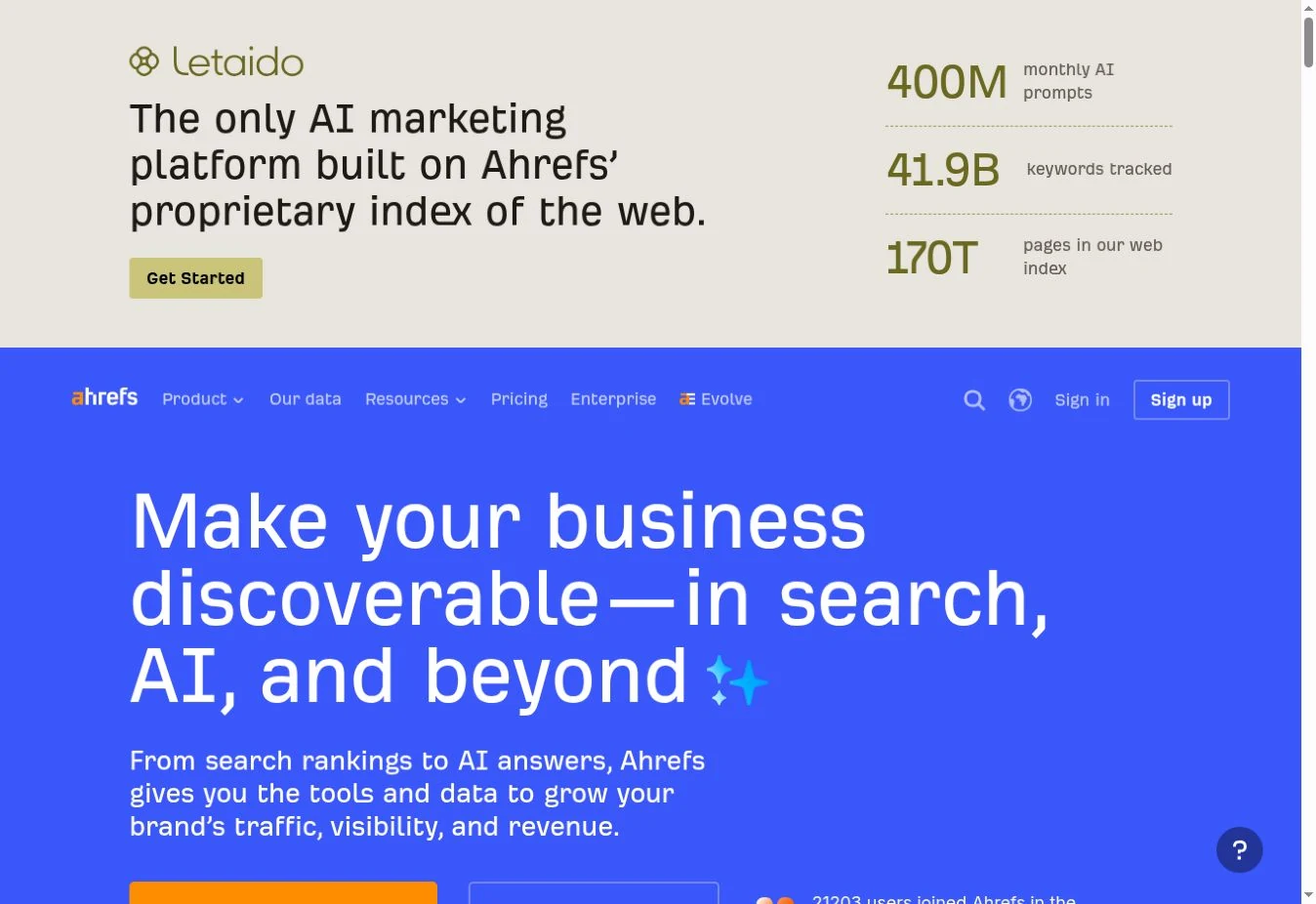
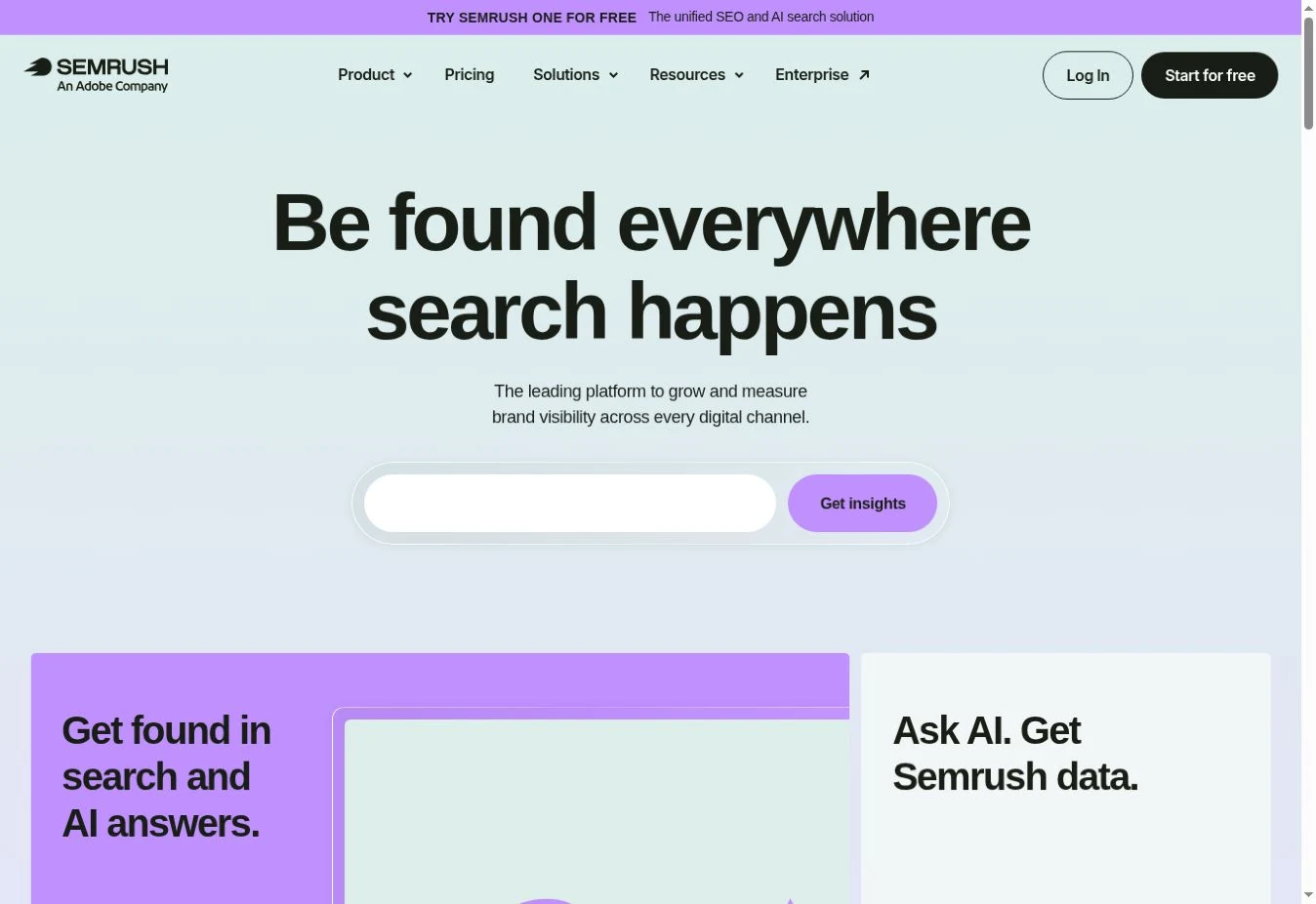
Research was checked against Ahrefs product and pricing pages, Brand Radar setup guidance, Semrush product and pricing pages, and the Semrush AI Visibility knowledge base on October 1, 2026. Links appear beside the relevant claims. Homepage captures document the interface shown that day; they do not establish product performance.
Explore ai tools for marketing & seo
Start with the main guide: 15 Best AI SEO Tools for Rankings, Content & AI Visibility in 2026.
Continue exploring: